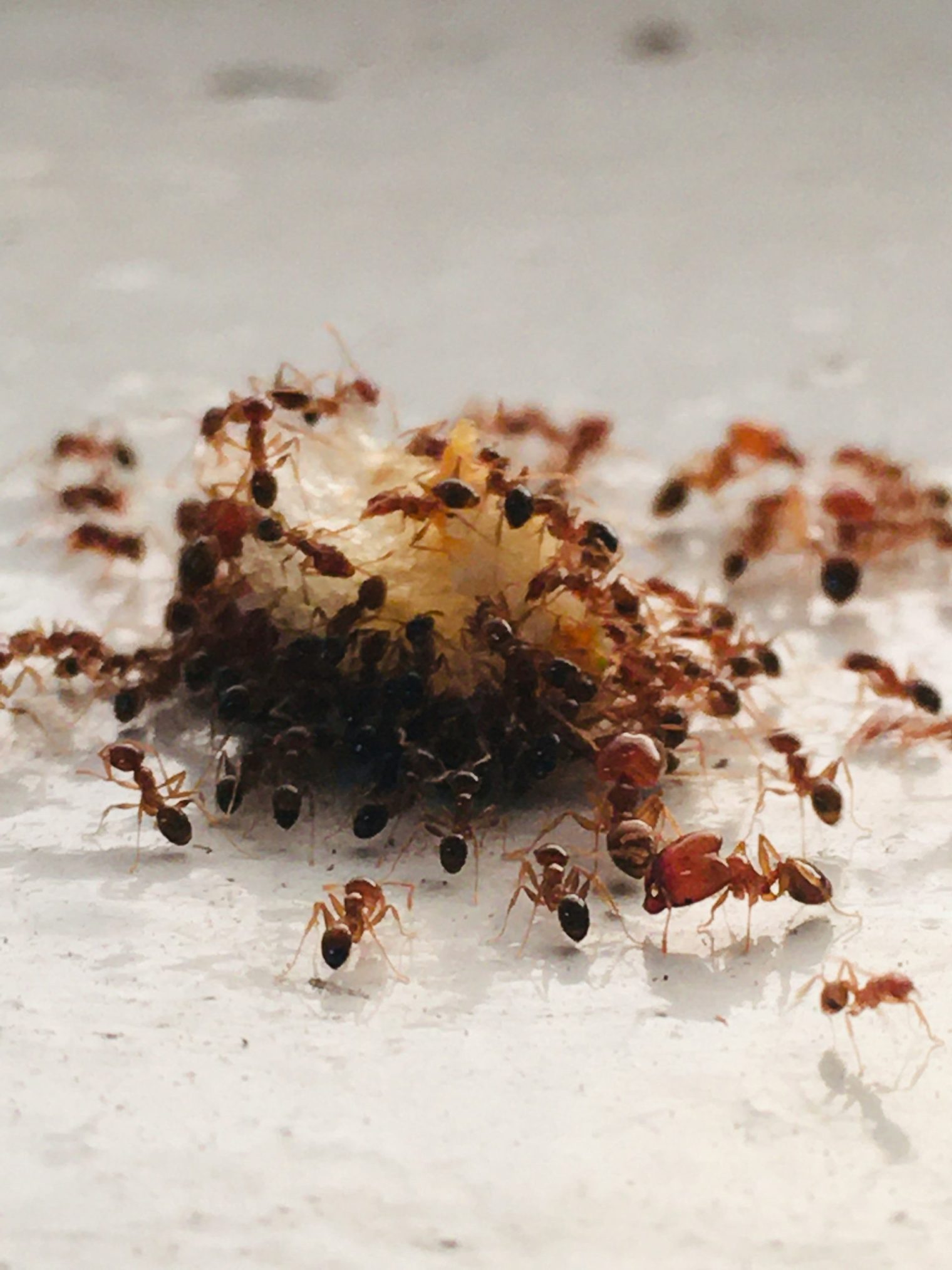
Ants are among the most persistent household pests homeowners encounter in Fort Worth, Texas. A few ants walking across a kitchen counter might not seem like a serious problem, but seeing them repeatedly can indicate a much larger colony nearby. Ants are constantly searching for food, water, and suitable places to establish their nests. Once they discover a reliable food source inside a home, they can establish trails that bring hundreds or even thousands of additional ants into the building.
The warm North Texas climate allows many ant species to remain active throughout much of the year. Homeowners in Fort Worth and surrounding communities may encounter ants in kitchens, bathrooms, garages, patios, landscaping, and even inside walls. Understanding why ants enter homes, where they establish colonies, and what attracts them is an important part of keeping an infestation under control.
Why Ants Are Such a Common Problem in Fort Worth
Ants are highly adaptable insects that can survive in many different environments. They establish colonies in soil, beneath concrete, inside landscaping materials, under foundations, and within structural voids. Some species prefer moist environments, while others are attracted to dry soil, wood, or readily available food.
In Fort Worth, changing weather conditions can influence ant activity. Extended periods of hot weather may cause ants to search for moisture around homes. Heavy rainfall can flood underground colonies, encouraging ants to relocate. Seasonal temperature changes can also influence where colonies establish themselves.
Homes with gardens, mature trees, flowerbeds, mulch, and irrigated lawns may provide especially attractive environments for ants. Once a colony establishes itself near a house, small openings around the foundation, plumbing penetrations, windows, and doors can provide access indoors.
This is why homeowners in Forest Hill, Arlington, Kennedale, and Benbrook sometimes discover ants inside their homes even when they maintain relatively clean properties.
Different Ant Species Require Different Treatment Approaches
Not all ants behave the same way. Identifying the species is an important part of developing an effective treatment strategy.
Carpenter ants are particularly concerning because they excavate galleries in wood to create nesting areas. They do not actually eat wood like termites, but their nesting activity can damage wood that has been softened by moisture or decay.
Odorous house ants are another common nuisance. They frequently enter kitchens and bathrooms in search of sweets and other food sources. When crushed, these ants produce a distinctive unpleasant odor.
Pavement ants often establish colonies beneath sidewalks, driveways, patios, and concrete slabs. They may enter buildings through small openings near foundations or door thresholds.
Fire ants are especially problematic in North Texas yards. Their underground colonies produce visible mounds, and disturbed colonies can attack people and pets. Fire ant activity can make otherwise usable lawns, playgrounds, and outdoor living areas uncomfortable.
Because different species have different nesting habits and food preferences, treating every ant infestation the same way can produce inconsistent results.
Why Ants Keep Returning After Treatment
One of the most frustrating experiences for homeowners is treating an ant problem only to see the insects return a few days later.
This frequently happens because killing visible ants does not necessarily eliminate the colony. The ants traveling across a countertop or floor represent only a small portion of the population. Most members of the colony remain hidden in a nest that may be located outside, beneath a slab, inside a wall, or somewhere else on the property.
Some ant species also establish multiple nesting sites connected to a larger colony. Eliminating one visible nest may leave other colonies undisturbed.
Another problem occurs when homeowners use products that repel ants without addressing the source of the infestation. Repellent treatments can sometimes cause colonies to relocate or split into additional nesting areas.
Effective ant management requires understanding the species, locating likely nesting areas, identifying entry points, and selecting treatments appropriate for the particular infestation.
Common Places Ants Enter Fort Worth Homes
Ants can enter through surprisingly small openings. A gap around a plumbing pipe or a small separation beneath a door may provide enough space for insects to get inside.
Some of the most common access points include:
- Gaps around exterior doors and garage doors.
- Cracks in concrete foundations.
- Openings around plumbing and electrical penetrations.
- Damaged window screens.
- Spaces beneath siding and exterior trim.
- Gaps around utility connections.
- Cracks where patios and driveways meet the home.
Ants may also travel along tree branches, shrubs, fences, and exterior walls before finding an opening.
Homeowners should pay particular attention to areas where vegetation touches the structure. Trimming branches and shrubs away from the exterior can reduce convenient pathways into the building.
Removing Food Sources Makes a Difference
Food availability is one of the biggest reasons ants establish indoor trails. Even small quantities of food can attract foraging workers.
Kitchen counters, pantry shelves, garbage containers, pet feeding areas, and recycling bins are common locations where ants discover food.
Sugary drinks, crumbs, grease, fruit, and improperly stored dry goods can all attract different species.
Keeping food in sealed containers, wiping counters regularly, cleaning beneath appliances, and removing garbage can reduce the likelihood of an indoor infestation.
Pet food deserves special attention. Leaving food bowls outside overnight can attract ants, particularly during warmer months.
However, sanitation alone may not eliminate an established colony. If ants continue appearing after food sources have been addressed, the infestation may require professional treatment.
Outdoor Conditions That Encourage Ant Colonies
The area surrounding a home can influence how likely an ant infestation becomes.
Mulch, decorative landscaping stones, stacked firewood, leaf litter, and dense vegetation provide shelter for many ant species. Excessive moisture from irrigation systems, leaking outdoor faucets, and poor drainage can also create attractive nesting conditions.
Homeowners should avoid allowing mulch to accumulate directly against exterior walls. Firewood should be stored away from the structure and elevated when possible.
It is also helpful to repair leaking irrigation lines and eliminate standing water around the property.
These measures do not guarantee that ants will stay away, but they can make the surrounding environment less attractive to colonies.
Professional Ant Control in Fort Worth
When ants continue appearing despite repeated cleaning and household treatments, professional pest control may be necessary.
A professional inspection can help determine which species is present, where ants are entering, and which areas are most likely to contain active nests.
Treatment methods depend on the species and infestation conditions. They may include targeted applications, appropriately selected baits, exterior treatments, and recommendations for correcting conditions that attract ants.
Ant control is not simply about killing the insects that homeowners can see. The objective is to address the source of the activity and reduce the likelihood of additional colonies establishing themselves.
Professional pest management can be especially useful when ants are appearing in several rooms, returning after repeated treatments, or establishing colonies around foundations and outdoor living areas.
Ant Problems Throughout the Fort Worth Service Area
Ant infestations are not limited to Fort Worth itself. Homeowners throughout the surrounding communities encounter many of the same problems.
We provide pest-control information and service-area coverage for Forest Hill, Arlington, Kennedale, and Benbrook.
Our surrounding service-area communities also include Westworth Village, River Oaks, and Sansom Park.
Additional coverage includes Haltom City, Pantego, Bedford, and Euless.
Homeowners in Everman, North Richland Hills, and Hurst can also experience recurring ant activity.
Don't Let a Small Ant Problem Become a Bigger Infestation
A few ants inside a home may indicate that a colony has already established a reliable route to food or water. Ignoring the activity or repeatedly killing visible insects may not address the underlying problem.
Identifying the species, understanding its nesting behavior, eliminating attractive conditions, and using appropriate treatments are all important parts of successful ant management.
If ants keep returning to your Fort Worth home, professional pest control can help identify the source of the infestation and determine an appropriate approach to getting the problem under control.